
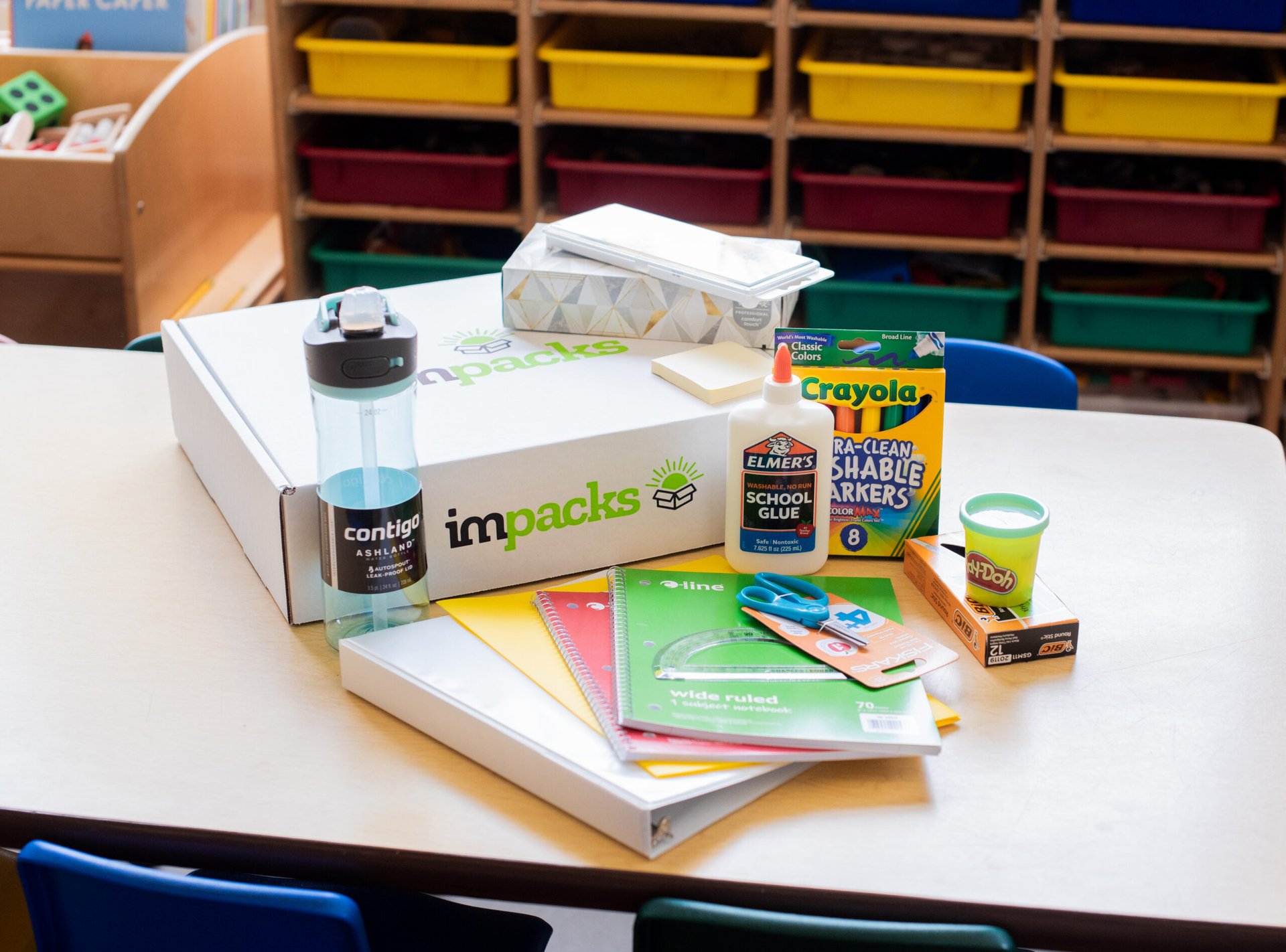
If you don’t know what a school supply kit is, you should check out this blog first.
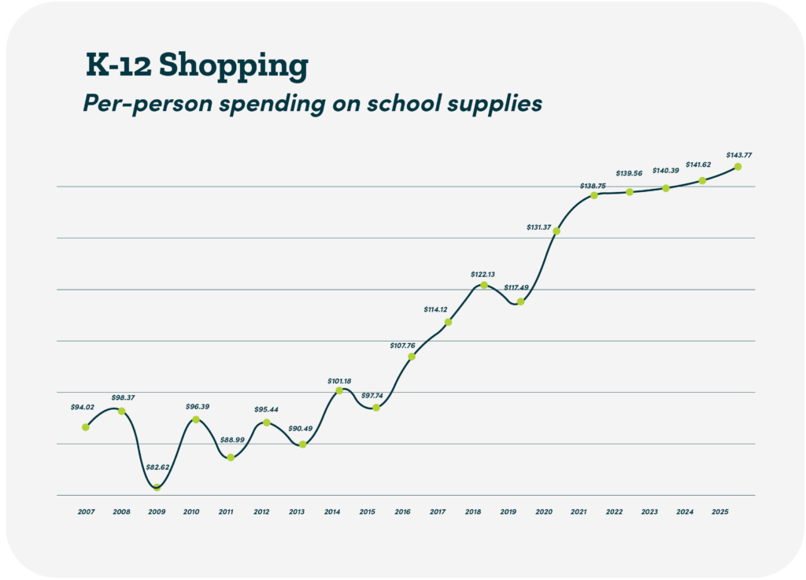
School leaders don’t need anyone to tell them that back-to-school has become more complicated. Supply lists are longer. Prices are less predictable. Families shop earlier, but not always successfully. By the time teachers open their classroom doors, some students arrive fully prepared, some arrive with partial supplies, and some arrive with none at all. The result is familiar: extra follow-up for administrators, extra spending for teachers, and a rocky start for students. The challenge continues to grow. According to the National Retail Federation, average spending on school supplies has increased by over 50% since 2007 and continues to rise.
This is at the heart of why schools are taking a closer look at a school supply kit program for their school community. For many schools, the appeal is not just convenience for families. It’s a chance to create a more consistent system before the year begins. When the process is planned well, school supply kits for schools can reduce confusion, improve readiness, and take pressure off the people – administrators, PTO/PTA volunteers, and parents – who are usually left solving supply problems in August.
This article walks through why schools are making that shift, what a supply kit program actually includes, and what tends to separate a smooth program from one that creates more work than it saves.
The Bigger Problem Schools Are Trying to Solve
The shopping list is only part of the issue. The harder problem is what happens when supply systems break down at scale. Teachers lose time identifying gaps, classrooms start the year inconsistently stocked, and families often reach out with the same questions every year about brands, quantities, deadlines, or where to find specific items. Not to mention the increase in spending for parents. More on that here.
The equity issue shows up quickly too. When some students arrive with every required item, and others do not, teachers have to bridge that gap immediately. AdoptAClassroom.org reported in 2025 that teachers spent an average of $895 out of pocket on school supplies during the 2024-2025 school year, while the median school-provided budget was $200; 97% of teachers said the budget was not enough. That helps explain why many schools are looking for systems that reduce missing supplies before the first day, rather than trying to patch the problem afterward.
 What a School Supply Kit Program Actually Is
A school supply kit program is not just a box of generic supplies. It’s a process built around teacher-approved lists. Those lists are organized by grade and then offered through a central ordering system so families can buy the exact supplies their student needs.
Fulfillment matters just as much as the list. In a well-run program, kits are packed according to the school’s requirements, labeled clearly, and delivered in a way that makes distribution manageable. That structure gives schools more predictability. It also gives families a simpler path than searching multiple stores for specific folders, exact notebook counts, or a calculator model that may already be out of stock.
Why More Schools Are Moving to Supply Kit Programs
They bring order to a messy season.
Back-to-school shopping starts earlier than many families expect. According to the National Retail Federation, 67% of back-to-school shoppers had already started buying for the 2025 season by early to mid-summer. That early activity can help prepare families, but it can also leave schools chasing questions and late decisions while supply availability keeps shifting. A school supply kit program moves more of that planning upstream.
They create more consistency across classrooms.
When a grade level uses aligned supply lists, and families can order from the same approved set, teachers spend less time sorting through substitutes or filling gaps. That consistency matters at the start of the year, when classroom routines are still being built.
This can also reduce the number of unnecessary items students bring in. Character-branded products, or excessive products (we’re looking at you, 64-count crayons!), can cause unnecessary bullying in the classroom. Focusing on consistent, required supplies helps promote equity in the classroom.

They can reduce teacher spending and staff follow-up.
If more students arrive with the right materials on day one, teachers are less likely to cover those missing basics themselves. Administrators and office staff also spend less time answering repeat questions about what to buy, where to find it, and whether a late shopper can still get the right items.
They give schools another way to address equity.
Some schools pair kit programs with donation or sponsorship options, and most schools keep the program optional and use it alongside broader support efforts for families who need help. The key point is that kits can fit into a larger readiness strategy rather than sitting off to the side as a convenience offering.
One way Impacks has committed to supporting classrooms and teachers is by offering the Impacks Donation Match Program. This is an optional program in which parents can be prompted at checkout to donate to your school, and we match a percentage of each donation. Parents can also donate additional kits. Monetary and kit donations are sent directly to the school or PTO/PTA.
What Makes a School Supply Kit Program Successful
Successful programs are much less work than administrators and PTO/PTA volunteers would assume. The basics matter most: accurate supply lists, agreement among teachers within a grade, reasonable timelines, simple ordering, and clear communication with families.
The list itself has to be settled early enough for the program to launch with time to spare. That matters because families handle back-to-school shopping earlier than they used to. It also matters because price and availability can move fast. The National Education Association noted in 2025 that typical school supplies cost an average of 7.3% more than the previous year, with some items rising much more sharply. The longer a school waits to finalize lists, the harder it becomes to keep the process orderly and reasonably priced.
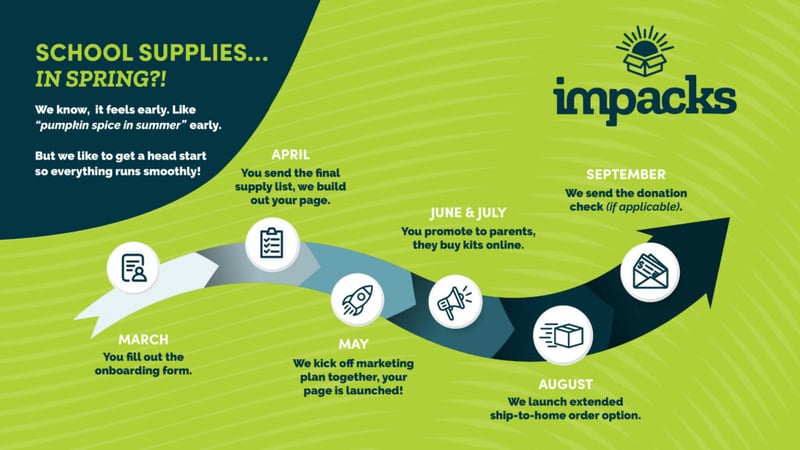
Ideally, a school supply kit program should launch while there are still a few weeks left of the school year. This allows parents time to get familiar with the program. And, let’s be honest: many parents “tune out” of school communication once summer arrives. Launching early helps drive awareness and keeps parents informed. While it may take some time to get used to, teachers and parents are often eager to take care of back-to-school lists earlier once they see the program’s value. Here is the ideal program timeline:
The best programs also reduce work for staff instead of shifting it around. Ordering should be easy for families. Delivery should be predictable. Distribution should be simple enough that teachers and administrators are not stuck untangling boxes or tracking down exceptions during the busiest week of the year.
The best programs offer one or both of the following:
- Ship-to-home, with reliable delivery timelines
- Ship-to-school, with clearly labeled boxes that are color-coded by grade
Where Schools Can Run Into Trouble
Most problems with school supply kits for schools are planning problems. They usually show up in one of three places:
- Last-minute list changes that force schools or families to work from outdated information
- More than one consistent list per grade level
- Unclear program ownership inside the school, where there is no clear point of contact to work with the kitting partner
None of those issues mean the program itself is flawed. They usually mean the setup was rushed or ownership was fuzzy.
Who Typically Manages a Kit Program Inside the School
This looks different depending on the school. In some schools, the PTO or PTA leads the work with administrative oversight. In others, the school office administrator or a staff leader manages the process. Either model can work, and the most successful partnerships often involve both the PTO/PTA and school administrators working together.
What matters more is that the school decides who owns each part of the process: list approval, family communication, order timeline, delivery coordination, and distribution (if running a ship-to-school program).
Is a School Supply Kit Program Right for Your School?
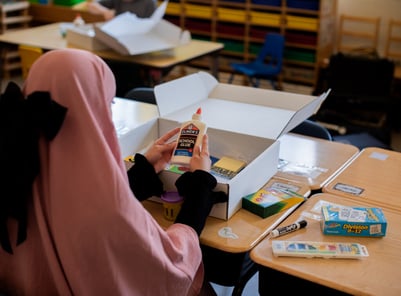 Not every school needs the same solution. A kit program is usually worth evaluating when supply lists are detailed, staff spend real time dealing with missing items every fall, or the school wants a more consistent start across classrooms.
A few practical questions can help: Can your supply lists be accurate and approved on time (ideally, a few weeks before the end of the school year)? Do families regularly ask for help finding the right items? Do teachers end up filling gaps with their own money? Would a centralized system make ordering and distribution easier rather than harder?
If the answer to several of those questions is yes, a school supply kit program may be worth serious consideration. If you want a fuller picture of how the process works in practice, you can learn more here.
The shift toward school supply kits for schools is really a shift toward predictability. Schools are trying to reduce confusion, protect teacher time, and help more students walk in ready on day one. When that is the goal, a well-planned kit program can make a lot of sense.
