

Every August, teachers walk into classrooms they've prepared for weeks and start taking stock of what students actually brought. The supply list went out in May. It was specific. It had quantities, brand names in some cases, and clear grade-level requirements. And still — somebody's missing a composition notebook, half the class brought wide-ruled paper when the teacher needed college-ruled, and three students don't have scissors at all.
This isn't a teacher problem or a parent problem. It's a systems problem. Supply lists, no matter how well written, depend on a chain of accurate interpretation and execution that has a lot of places to break down. Understanding where those breakdowns happen is the first step toward doing something about them.
The Assumption Behind Supply Lists

Supply lists are built on a reasonable assumption: that families can read the list, find the items, buy the right versions, and get them to school by the first day. For a lot of families, that's true. For a lot of families, it isn't — and even for families who have every resource and intention to get it right, the margin for error is larger than most teachers realize.
Lists are written from the teacher's perspective, which is deeply familiar with the materials. "One 1-inch binder with clear front pocket" makes total sense to someone who uses binders every day for instruction. To a parent standing in the school supply aisle at Target in late July, looking at twelve different binder options in that size, it can be puzzle.
Add in parents managing multiple children with different lists, different grade levels, and different classrooms — sometimes in different schools — and the cognitive load of executing every list accurately gets significant.
Where the Breakdown Happens for Families
A few specific places where supply list execution tends to go wrong:
- Brand ambiguity: When a teacher specifies "Crayola 10-count Washable Markers" but the store only has the 8-count box, families often substitute rather than driving to another store. That substitution might seem equivalent, but still creates a gap in what the classroom expected.
- Quantity confusion: Lists sometimes say "2 folders" when what's meant is 2 folders per subject, or "one package of pencils" when a package of 12 isn't going to last the semester. Families executing to the letter of the list end up undersupplying.
- Availability issues: Popular items — specific notebook sizes, certain scissors, branded products — sell out at major retailers in early August. Families who shop late (or even mid-July at some stores) are working with depleted inventory.
- Multi-child complexity: Families with two or three kids in different grades are managing several lists simultaneously. Items get confused, purchases get missed, and the mental overhead of keeping it all straight leads to more errors.
- Financial constraints: Families working within a tight budget may skip items that seem optional, buy fewer quantities, or choose lower-cost substitutes that don't meet the teacher's specifications.
How Supply Gaps Show Up in the Classroom
Teachers feel this on the first day and in the first weeks. When students arrive with inconsistent supplies, classrooms can't start uniform activities as planned. Shared supplies run out faster because students who are missing items use classroom stock. Teachers spend time and energy taking inventory, figuring out who needs what, and filling gaps — often with supplies they've bought themselves.
That personal spending adds up. According to AdoptAClassroom.org's 2025 teacher survey, the average teacher spent $895 out of pocket on classroom supplies during the 2024–2025 school year — a 49% increase since 2015. A significant portion of that spending is filling gaps that showed up because students arrived without the right materials.
The equity dimension is also immediate. Classrooms where some students arrived fully prepared and others didn't start the year with visible differences in resources. That's uncomfortable for students, frustrating for teachers, and hard to quietly fix without drawing attention to which families had trouble getting everything.
Why Common Fixes Don't Fully Close the Gap
 Schools try all kinds of things to reduce list-related gaps: clearer language on the list, reminder emails closer to the deadline, classroom wish lists, donation tables at open house. These help. None of them solve the problem.
Clearer language reduces misinterpretation but doesn't address families who don't have time to shop carefully, stores that are out of stock, or budgets that require tradeoffs. Reminder emails reach families who already got the list — they don't change the underlying complexity of executing it accurately. Donation tables help specific families but don't ensure classroom-wide consistency.
All of these approaches still require families to correctly interpret and independently execute the list. As long as that's the model, gaps will persist — not because families aren't trying, but because the execution chain is long and has a lot of places where things can go wrong.
The Role of Accuracy in Classroom Readiness
The list itself isn't the problem. The problem is the gap between what the list says and what ends up in students' backpacks. Closing that gap requires something that makes the execution more accurate — not just the communication more clear.
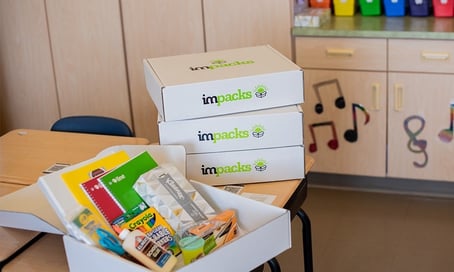 When a school moves to a structured supply kit program, the interpretation step is removed entirely. The teacher approves the list, which is then translated directly into a kit. Families don't select individual items — they receive a kit assembled from exactly what the teacher requested, in exactly the right quantities and specifications. There's nothing to misread, substitute, or miss.
And unlike general retailers, a school supply kit program allows parents to order singular items, which helps drive down the overall cost. If the teacher asks for two highlighters, parents don’t have to buy a pack of six. Additionally, the best school supply kit programs allow parents to drop products they might already have at home, like scissors or headphones.
The accuracy improvement isn't marginal. It's the difference between a classroom that starts the year with 23 students who all have composition notebooks and one that starts with 18 who have the right notebook, three who have the wrong size, and two who don't have one at all.
How Teachers Can Support Readiness Without Managing the Process
 Teachers don't need to become logisticians. The best outcomes come from programs that handle the execution — so teachers can focus on instruction and not on supply management.
A few things that actually shift the outcome:
- Advocating with school leadership for a structured kit or supply program rather than relying solely on the list model
- Finalizing supply lists early in the spring — March or April, rather than June — so programs have time to build accurate kits before ordering windows open
- Being specific about brand and quality requirements when submitting lists, so that whatever program the school uses can source accurately
Schools that want to explore what a structured supply program looks like in practice can learn more through Impacks, which works with teachers and administrators across the country to translate supply lists into accurate, teacher-approved kits. The program is free for schools to run — families order directly, and supplies are delivered to the school ready for distribution, or directly to their home.
The supply list isn't going away. But it doesn't have to be the last link in a chain that breaks every August.
