
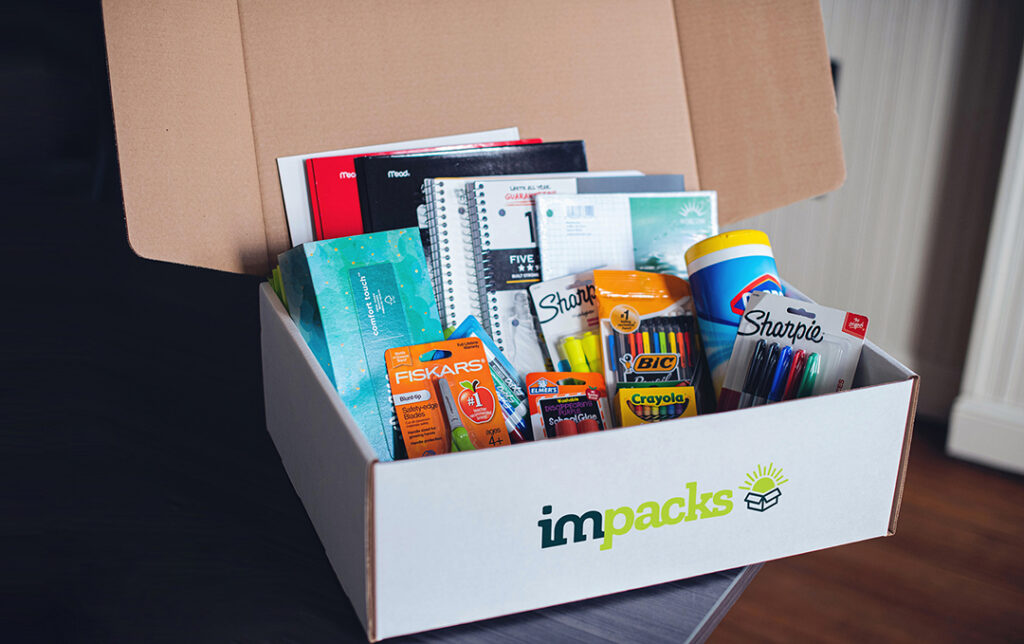
School supply kits are familiar to most administrators and PTO or PTA leaders. The basic premise is clear: kits can make back-to-school easier for families.
The questions schools ask are usually bigger than convenience. Leaders want to understand how kits are built, how orders and delivery work, and whether a kit program genuinely supports classroom readiness and equity.
This collection of FAQs covers the most common questions we hear from schools evaluating a supply kit program, with clear definitions, practical expectations, and a few data points to ground the conversation.
 What Are School Supply Kits?
School supply kits are pre-organized sets of classroom supplies assembled from teacher-approved lists by grade level. Essentially: the list your school gives to parents in the summer, but conveniently curated in an easy-to-order box for individual students. The goal is consistency: the right materials, for the right student, at the right time. The best kits have high-quality, name-brand supplies built for durability and longevity in the classroom.
How Does a School Supply Kit Program Work for a School?
School supply kit programs are run by companies like Impacks to sell convenient supply kits to parents. Importantly, school supply kit programs should be free for schools to run.
It all starts with school administrators and PTO/PTA members determining if the option makes sense for their school. After talking to thousands of schools, here are some common determining factors we’ve seen:
Good fit:
- You have parents in your school community looking for a more convenient shopping option. Since this is rarely a required program, implementing a school supply kit program simply provides parents with an additional option. The choice of where to purchase is still up to them. A good way to measure this is to assess whether you have parents who often shop on Amazon. If the answer is yes, you are most likely a great fit for a school supply kit program.
- You have an actively engaged school administrator and/or PTO and PTA committee. The key to a successful program is communication with parents: share the program with them early and often.
- You have a school that would benefit from a donation program. While optional, the vast majority of Impacks partner schools opt in to our Donation Match program, which matches a portion of donations made at checkout by parents. Results vary by school, but the program is popular because it offers a no-effort fundraising opportunity.
Poor fit:
- You don’t require parents to purchase supplies. If you don’t require parents to bring in supplies – due to socioeconomic factors, or for other reasons – this program likely isn’t a good fit. Rather, you might be a good fit for a bulk supply purchasing program.
Bandwidth Concern:
 Some schools are concerned they won’t have the bandwidth to run a school supply kit program. While understandable, it’s important to be aware of a few things:
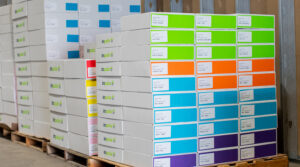
A program like this takes very little time to set up. Most of the time is invested in communicating the option to parents. Because Impacks prepares all marketing materials for our school partners, many have reported spending less than 5 hours on setup and parent communication throughout the course of the program. Typically, schools opt for our “ship-to-school” option and distribute kits to parents during their Open House event. Impacks color-codes each kit by grade level and includes an easy-to-read student name label on the side of each box to make distribution simple and fast.
If there are concerns about staffing or volunteers to coordinate kit distribution, opting for the “ship-to-home” program might be the right choice for your school. Ship-to-home offers convenience to the parents with minimal effort on the part of administrators and volunteers. The key difference is cost. Ship-to-home kits can have a slightly increased cost due to shipping.
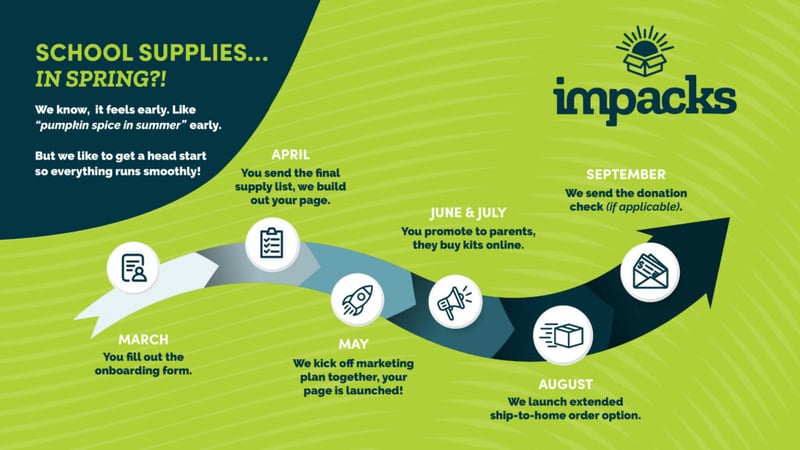
What Are The Typical Steps, Start to Finish?
Most kit programs follow the same high-level flow:
- Send your final school supply list (or last year’s, if you don’t have it finalized yet)
- Review your school’s specific program page and provide feedback and/or approve
- Launch the program by communicating the option with parents
- Accept the kit delivery (ship-to-school program) – typically arrives on a pallet(s)
- Distribute kits to families (ship-to-school program) – typically at your Open House event
- Receive the donation check via mail
The goal is to launch your program with at least 3-6 weeks remaining before summer begins. The most successful programs communicate with parents early and often, since parents have a tendency to ignore school communications once summer begins. While this is the optimal option, we’ve also seen many schools have success that launched much later. It all depends on the strength of your internal school communication.
While other programs may differ, Impacks streamlines the school kitting process by:
- Building your customized portal page for you
- Creating marketing materials tailored to your school (flyers, posters, QR codes, yard signs, social media content, email content, and more)
- Coordinating across your team to make sure delivery goes smoothly
- Handling 100% of customer service needs among parents
- Color-coding the kits by grade level for simple distribution
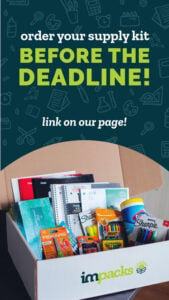
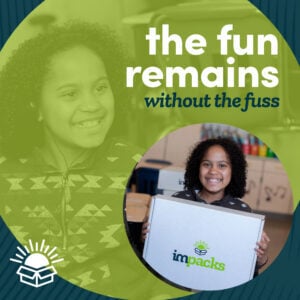
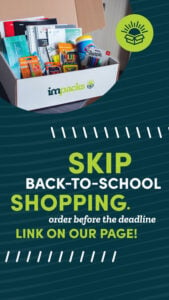
Example social media graphics.
Order Deadlines
Order deadlines for parents vary based on your school supply kit partner. At Impacks, we base this on your school start date.
|
Open House Date |
Impacks Ship-To-School Order Deadline |
|
End of June |
June 5 |
|
End of July |
June 30 |
|
End of August, into September |
July 15 |
We offer an option to switch to a “ship-to-home” program after the deadline passes, to allow parents an opportunity to still order even if they missed the deadline. Our ship-to-home deadline is typically August 15. Parents are made aware that ship-to-home kits take up to 14 days to arrive after ordering.
What’s Typically Included in a School Supply Kit?
Kits usually include the essentials you would expect: pencils, erasers, notebooks, folders, glue, crayons, markers, and other grade-level items.
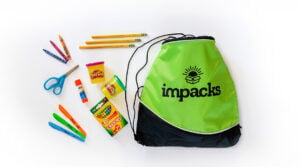
Lists can also include very specific items, and that is intentional. In many classrooms, teachers link supply requirements to curriculum and organization systems (for example, folder colors by subject). Standardizing supplies can also reduce classroom distractions and social comparison around “extras.” While many of us have nostalgia for the 64-count box of Crayola crayons, teachers often prefer that parents avoid buying supplies not on the list. These items can lead to bullying and disruption in the classroom.
Pre-packaged school supply kits don’t always include everything. Some items may be excluded depending on the list, such as gym shoes.
How Much Do School Supply Kits Cost?
There is no universal kit price. Cost varies by grade, list length, brand preferences, and specialty items.
For a national benchmark, the National Retail Federation reported that families of K-12 shoppers budgeted an average of $143.77 for school supplies in 2025 (excluding clothing, shoes, and electronics).
Our average kit costs $66, but the price varies widely depending on the number and types of products required for each kit. One unique feature of Impacks is our unlimited customization. We allow parents to drop products from the kit they may already have at home, like scissors or headphones. We also allow parents to add additional products to their kit if they want extras to keep at home. We strive to offer affordability balanced with convenience, saving parents hours of in-store shopping or overspending on other online retailers, like Amazon.
Are School Supply Kits More Affordable Than Retail Shopping?
Affordability is bigger than a single price tag.
A parent who coupon-shops across multiple stores or shops for off-brand products at dollar stores may beat any kit price. But many families choose convenience, and costs show up in more places than a receipt: time, extra trips, duplicate purchases, and last-minute substitutions when shelves are picked over.
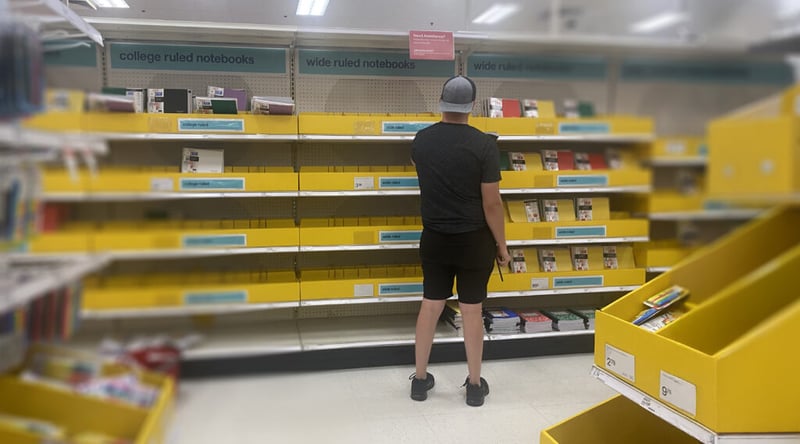
One benefit of purchasing a supply kit is that parents can buy exactly what’s required on the list. If a teacher requests two highlighters, you don’t need to purchase a pack of six. This also helps keep spending down.
How Do School Supply Kits Support Equity?
Kits can support equity by ensuring that every student starts the year with the same core supplies, reducing supply gaps, and helping teachers focus on instruction.
This matters because many teachers routinely fill those gaps themselves. AdoptAClassroom.org’s 2025 national teacher survey reported that teachers spent an average of $895 out of pocket on school supplies in the 2024 to 2025 school year. The same survey reported a median school-provided supply budget of $200, and 97% of teachers said that the budget was not enough.
Our Donation Match program can also help raise critical funds to support students and teachers in need. Ultimately, we leave it to the school to determine how the donated funds should be spent.
Who Manages a School Supply Kit Program?
Management varies. Many programs are led by the school administrator, with support from parent leaders and/or key staff and teachers. Other programs are led by the PTO or PTA with administrative oversight. The best structure is the one that keeps workload low and communication consistent.
The most successful programs have a communication plan in place to make sure all parents are aware of the program – early and often. This usually includes communicating the program to parents through regularly scheduled newsletters from school leadership, sending dedicated emails solely about the program, sharing it on social media, and distributing printed materials to families. Regardless of who leads the program, it’s important to make sure everyone involved in parent communication is aware of the program.
When Should Schools Start Planning for School Supply Kits?
As noted earlier, the goal is to launch your program with at least 3-6 weeks remaining before the end of the school year. While that may seem early, here’s why it matters:
- Parents often ignore school communications once summer begins. The program is optional, but we should strive to make sure all parents are at least aware of the option.
- We recommend sending a minimum of 7 communications to parents, ideally spread out over a few weeks.
- Order deadlines vary based on your Fall school start date, but our latest deadline for ship-to-school orders is July 15. While this may seem early to some, we have one of the latest order deadlines available. Our deadline ensures all kits arrive on time for your Open House.
- Even with our extended mid-August ship-to-home option, kits can take up to 14 days to deliver. We want to ensure students have their supplies for the first day of school
Here’s the good news: across our partners, we’ve seen a common trend. After a year or two, parents get accustomed to the earlier shopping deadline. Many come to appreciate it, as one less thing to worry about during their busy summer.
How Can I Get a School Supply Kit Program Started?
 Start by looping in the right stakeholders: whoever owns supply lists, whoever owns family communication, and whoever will coordinate distribution at open house. Ask yourself and your team: Is this an option parents at your school would want?
If you are exploring Impacks, we encourage you to reach out so we can schedule a brief 15-minute call to make sure we’re the right fit for your school.
A strong kit program is not just a convenience add-on. When lists, timelines, and support for students in need are handled well, kits become a practical readiness strategy for the whole school community.
