
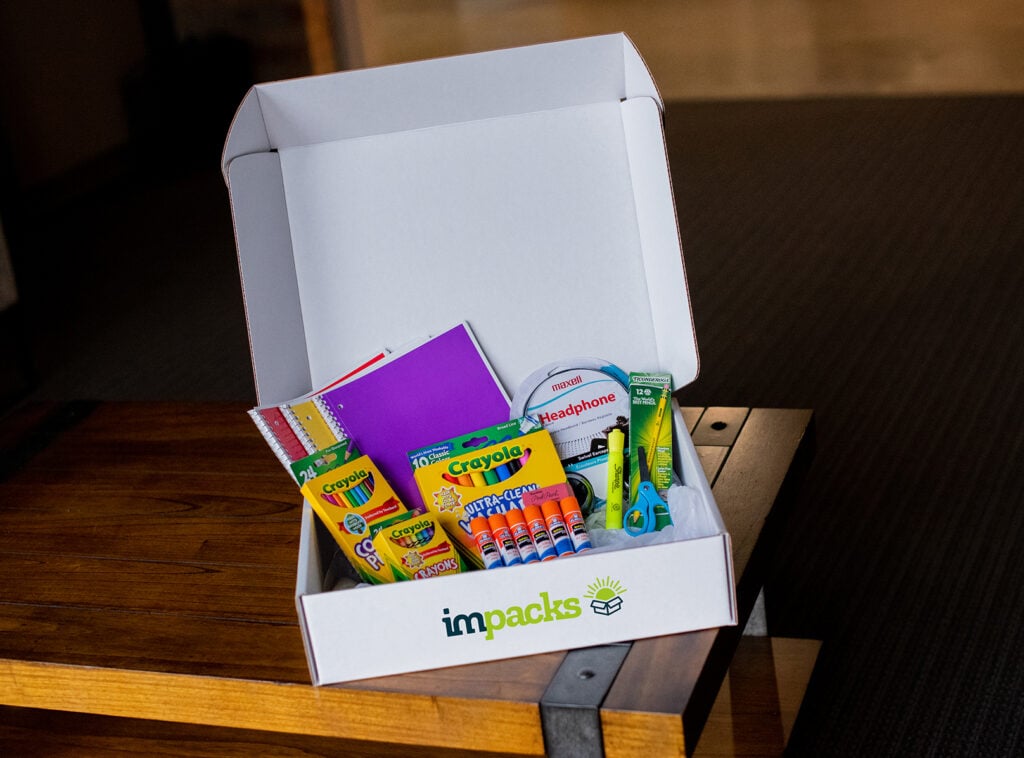
If you don’t know what a school supply kit is, you should check out this blog first.
Cost is one of the first questions schools ask when they start exploring a school supply kit program. That makes sense. Administrators and PTO/PTA leaders are not just looking at a price tag. They are trying to figure out whether a kit program is fair for families, manageable for staff, and worth offering as an option.
 There is no single “correct” price for customized school supply kits. A kindergarten kit and a middle school kit often contain very different required supplies, therefore the cost for each will vary. A list built around name-brand supplies will land differently than one built around lower-cost alternatives. Delivery model matters too – i.e., will the kits be shipped in bulk to the school, or directly to the family’s home? Specialty items and specific packaging requirements can also increase the cost.
The better question is not “What should a customized school supply kit cost?” but “What is driving the cost, and does the program deliver value for that price?” That is the question this blog answers.
What’s a Realistic Price for a School Supply Kit Program?
The honest answer is: it depends on the list.
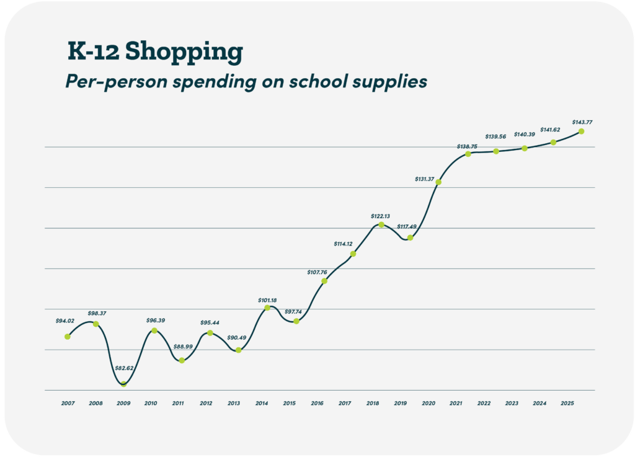
For context, the National Retail Federation reported that families with K-12 students planned to spend an average of $143.77 on school supplies in 2025. That number is useful as a national benchmark, but it is not a school-kit benchmark. It reflects broad family spending, not a teacher-approved grade-level kit with exact quantities, sorting, and delivery built in. Deloitte’s 2025 back-to-school survey also found that parents planned to spend about $570 per child across all back-to-school categories while focusing more heavily on essentials and value. Those categories include more than supplies alone, but they point to the same reality: families are price-aware, and schools should be too. In fact, according to the National Retail Federation, average spending on school supplies has increased by over 50% since 2007 and continues to rise.
A fair kit price usually reflects the actual list, the quality level of the products, and the work required to get the right supplies to the right student.
Factors That Drive School Supply Kit Cost
1. Grade level and list length
Elementary kits often include a large number of consumables, such as crayons, glue sticks, folders, notebooks, and markers. Upper grades may have fewer total items but more expensive ones. The longer the list, the higher the cost tends to go. Across our school partners, our average elementary and middle school kits contain anywhere from 25 to 30 unique items.
2. Brand requirements
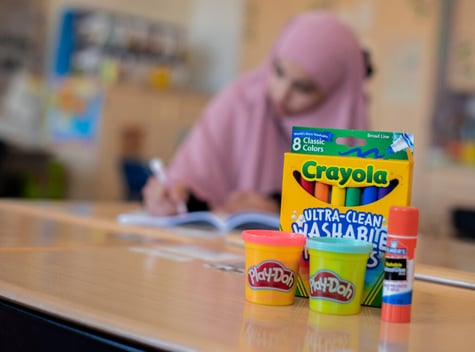
This is one of the biggest price drivers. If a school wants specific name brands for crayons, markers, folders, or pencils, the kit price will reflect that. While this differs across school supply kitting companies, Impacks defaults to primarily name-brand products. We do this because teachers are very specific about wanting certain brands, such as Crayola or Expo.
 3. Specialty items
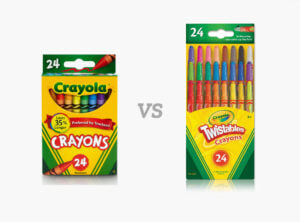
Headphones, calculators, binders, twistable crayons, trapper keepers, and other non-basic items can quickly raise a kit’s price. A list may look manageable at first glance, but it can climb once a few higher-cost items are added. One way Impacks aims to keep kits affordable is by offering parents a way to drop products from the kit they may already have at home.
4. Packaging and delivery
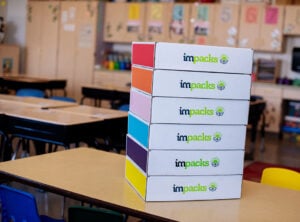
A kit is not just a set of products. Someone has to source the materials, count them, pack them by grade, label them, and make sure they are ready for distribution. The delivery model matters too. Ship-to-home usually costs more because individual shipments incur additional freight and fulfillment costs. Ship-to-school can be more cost-efficient, especially when schools have a clear distribution plan. That said, while there may be an added cost through fulfillment, this is often balanced out by:
- Overall reduced cost due to products sourced at wholesale prices
- Ability to order exact quantities per the required list (i.e., ability to buy one highlighter instead of a pack of six)
What Should Be Included in School Supply Kit Pricing?
A school supply kit price should cover the products in the box, but it should also reflect the work required to turn a supply list into a usable program. Depending on the partner, that may include product sourcing, kit assembly labor, grade-level sorting, an online ordering system for families, customer service, and delivery.
That does not mean a program should be overpriced. It does mean the price should be evaluated as a full-service offering, not
only as a stack of loose retail items.
Schools should also ask what is not included. Are there shipping charges added later? Processing fees? Extra delivery charges? If a program looks inexpensive at first and then adds fees after checkout, families notice. Clear pricing matters.
Similarly, when comparing kitting companies, it’s important to compare exact products. Understanding whether the products are brand-name or off-brand is crucial. While an overall kit may appear cheaper, it could contain off-brand items with a short shelf life and poor classroom performance.
Supply Kits vs. Retail: How to Compare
This is where many comparisons go wrong.
A common mistake is comparing a kit price to a handful of sale items from a weekly ad. That’s not a real comparison. A useful comparison matches the full list item by item, with similar brands, similar package sizes, and the same required quantities. It should also include tax and shipping if ordering online.
Retailers will often use a “loss leader” strategy for back-to-school products. This is a marketing strategy in which a product is sold below its market price to attract customers, increase foot traffic, or boost sales of higher-margin items. For example, retailers may sell a $1.25 box of crayons for 25¢, but quadruple the cost of a standard binder. Shopping in traditional retail often leads parents to overspend on what we call “end-cap traps.” These are the shiny, sparkly items along the ends of each aisle that your student may want, but teachers generally don’t want in the classroom. These “extras” can be distracting and sometimes lead to bullying amongst students.
This leads us to the hidden cost of shopping in-store: hours spent, often with kids in tow, trying to find the specific items on the list. Many parents report having to shop at three different retailers to fulfill their list. Time and travel add up quickly.
In that same report, Deloitte found that parents were stretching purchases over a longer period and becoming more deliberate about value in 2025. For some families, that approach works. For others, it means more planning, more checking inventory, and more chances to buy extras that were not on the list.
The best comparison method is simple:
- Use the exact school list
- Match brands as closely as possible
- Match package counts and quantities
- Add tax or shipping.
- Factor in time and transportation.
- Compare against the final kit price, not an advertised starting price
How to Keep Costs Low Without Sacrificing Quality
Schools have more control here than they sometimes realize.
Start with list discipline. If every teacher at the same grade level submits a different version of the list, costs and confusion both go up. A standardized grade-level list usually leads to a cleaner ordering experience, a more predictable price, and more equitable outcomes across students.
Review the list for extras. Some items are essential for instruction. Others are preferences that may be nice to have, but not necessary for every student to bring in on day one. Tightening the list can reduce cost without weakening classroom readiness.
Check quantities. Duplicate supplies can make sense when teachers are planning for replacement needs later in the year. Still, it is worth asking whether every duplicate on the list is truly necessary.
Equity Options When Cost Is a Barrier
A kit program should stay optional for families unless a school has a clear reason to structure it differently. Families should be able to shop on their own if that is the better fit for their budget.
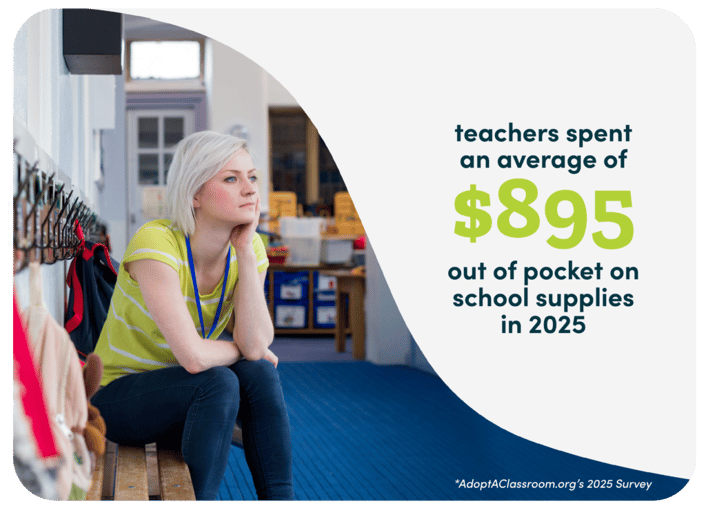
Schools can also build in support options. Donation funds, sponsor-backed scholarships, and community support can help cover the cost of kits for students who need them. That matters because supply gaps often shift back to teachers. AdoptAClassroom.org’s 2025 survey found that teachers spent an average of $895 out of pocket on school supplies during the 2024-2025 school year. The median school-provided supply budget was $200, and 97% of teachers said that the budget was not enough. When schools plan for equity up front, they reduce that burden.
What’s Best for Your School?
A school supply kit program is usually a good fit when it solves real problems without creating new ones.
Before choosing a kitting partner, schools should ask:
- Will offering this program simplify shopping for parents?
- Is pricing clear, with no surprise fees?
- Is delivery predictable, whether that is directly to homes or to your school?
- Will the program reduce staff and volunteer workload?
- Is it possible to drop unneeded products from the kit to keep costs down?
- Does the kitting partner have a proven track record of good customer service?
- Is there a fundraising element, or a way to support families in need?
- Does the kitting partner provide all the necessary marketing materials to get the message out to parents?
- Will the kits include teacher-approved brands and products?
- Is the e-commerce experience intuitive and easy for parents to use?
Those questions matter more than chasing the lowest sticker price.
A low-cost kit is not a win if the supplies are poor quality, the process is confusing, or the program creates extra work for the school. The better goal is a fair, transparent program that helps families get exactly what teachers asked for and helps the school start the year ready.
