
Bulk purchasing isn't a new concept for schools — most administrators have bought paper, pencils, or cleaning supplies in volume at some point. But when schools start thinking about bulk supply purchasing at a larger scale, the questions get more specific: What counts as "bulk"? What's actually included in the price? How do you manage inventory? And does it actually reduce workload, or just shift it?
This FAQ addresses the most common questions schools and districts ask when evaluating bulk purchasing for classroom supplies.
What Are Bulk School Supplies?
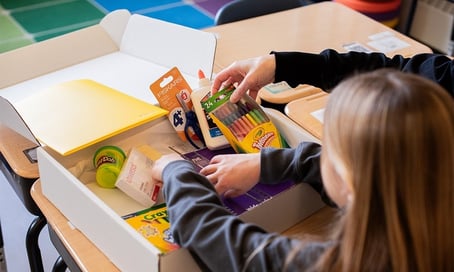
In a school context, bulk school supplies typically means ordering large quantities of commonly used classroom materials — paper, pencils, markers, folders, notebooks, glue sticks, paper towels, disinfectant wipes — intended for shared use across classrooms, grades, or the full building.
This is different from student-specific supply kits, which are assembled by grade level and distributed to individual students. Bulk supplies are generally managed internally by the school and used to replenish classroom inventory throughout the year rather than being sent home with students.
The definition varies by school and district. Some use "bulk" to mean a one-time back-to-school purchase covering all classrooms. Others use it to describe ongoing, repeating orders throughout the year. Both models are common.
Why Do Schools Buy Supplies in Bulk?
The short answer: to reduce the number of smaller, repeated purchases and to control cost. When a school manages supplies through individual teacher requests — each teacher ordering what they need when they run out — administrative burden adds up and pricing is inconsistent.
Bulk purchasing lets schools:
- Reduce the frequency of small orders and the administrative work they generate
- Negotiate better per-unit pricing through volume
- Maintain consistent inventory so teachers aren't waiting on supplies mid-semester
- Plan annual supply budgets with more accuracy
The financial pressure behind this thinking is real. According to AdoptAClassroom.org's 2025 teacher survey, the median school supply budget provided to teachers is just $200 — and 97% of teachers say that's not enough. When institutional supply systems don't keep up, teachers absorb the gap out of their own pockets, spending an average of $895 per year on classroom supplies. Bulk programs, when designed well, reduce how often that happens.
What Types of Supplies Make Sense to Buy in Bulk?
Bulk purchasing works best for standardized, high-use consumables that are consistent across grades and classrooms. These are items that get used reliably throughout the year and don't vary much by teacher or subject.
 Common bulk supply categories:
- Copy paper and loose-leaf paper
- Pencils, pens, and markers
- Composition notebooks and spiral notebooks
- Folders and binders
- Glue sticks, tape, and scissors
- Sticky notes and index cards
- Dry erase markers
- Paper towels and cleaning supplies
Bulk purchasing is a weaker fit for specialty items — instruments, lab equipment, specialty art supplies — because those items vary by subject and grade level, and over-ordering creates waste. It's also less suited for items that teachers need to choose individually based on their specific classroom setup.
How Does Bulk Purchasing Affect Cost?
Bulk pricing can reduce per-unit cost, but the savings depend on volume, product selection, and timing. Ordering 2,000 pencils costs less per pencil than ordering 50. That math holds across most consumable categories. And these savings can sometimes be as low as a third of retail cost, depending on the product category and quantity.
What doesn't always get factored in:
- Storage and handling costs: Supplies stored improperly or in excess create waste. Overstocking consumables that expire or degrade (construction paper fading, markers drying out) reduces effective savings.
- Administrative time: Managing a bulk supply system requires someone to track inventory, process orders, distribute to classrooms, and manage restocking. That time has a cost even if it's not a line item.
- Carrying costs: Buying more than you need in order to hit a volume discount ties up budget that could be used elsewhere.
Total value in bulk purchasing is about more than the price per unit. A school that buys 10,000 pencils at a great price but distributes them inefficiently may not save as much as the per-unit math suggests.
What Are the Logistical Considerations?
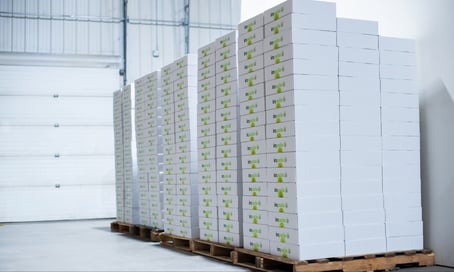
Storage is the first question most schools underestimate. A bulk order that arrives in a single pallet requires physical space and a plan for how supplies move from that pallet to individual classrooms. Without a clear system, supplies sit in storage longer than intended, get disorganized, or aren't distributed evenly.
Before committing to bulk purchasing at scale, it's worth mapping out:
- Where will supplies be received and stored?
- How will inventory be tracked so you know what's on hand vs. what's been distributed?
- Who is responsible for distribution — and do they have the capacity?
- How will mid-year restocking requests be handled?
Schools that manage bulk supplies well typically have a designated storage space, a clear request process for teachers who need to restock, and someone with consistent ownership over inventory. Without those elements, bulk programs often end up creating the administrative burden they were meant to reduce.
Who Typically Manages Bulk Supply Purchasing?
In most schools, bulk supply purchasing is handled by an administrator, operations manager, or office staff — sometimes in coordination with a district-level purchasing team. Large districts may have established partnerships set up with cooperative purchasing agencies for pre-negotiated rates on commonly placed orders. In smaller schools or districts, the principal or head administrator may manage it directly through a supply partner.
What tends to work well: one person or team with clear ownership over ordering, inventory, and distribution logistics. What tends to break down: shared responsibility with no clear point of accountability for when supplies run low or orders get missed.
If a school is considering a managed supply partner — a vendor that handles sourcing, ordering, and delivery logistics — that can shift the administrative burden significantly. The school sets the parameters, and the partner manages the execution. Some things to consider:
- Does the school supply partner have access to wholesale pricing through direct vendor partnership with major supply brands?
- Will they package supplies specifically to meet your needs? Think: color-coded, labeled boxes for easy classroom distribution
- Are they responsive, and will they meet your needs throughout the year if needed?
When Does Bulk Supply Purchasing Make the Most Sense?
Bulk purchasing tends to deliver the most value when:
 The school is large enough that standardized supply needs exist at scale
- Supply lists across teachers within a grade are reasonably consistent
- The school has adequate storage and distribution infrastructure
- Administrative bandwidth exists to manage inventory and restocking
- The school wants to reduce the frequency of small, repeated purchases
Smaller schools with simple supply needs and low teacher-to-student ratios may find that lighter purchasing approaches work better. And schools focused primarily on the back-to-school window — ensuring students arrive on day one with the right supplies — may find that student-specific kit programs solve a different and more immediate problem.
For schools exploring the full range of supply options, including how bulk and kit programs compare, Impacks works with schools across the country and can help identify what model fits a school's specific size, structure, and goals.
